

Understand What Is Happening
When you need more clarity before deciding what comes next.
You may have received a letter, notice, explanation, diagnosis, decision, request, set of instructions, or other information that leaves you with more questions than answers.
This pathway helps you slow the situation down and work toward greater clarity.

When Something Doesn’t Make Sense Yet
You may not know exactly what question to ask yet. You may only know that something important has happened and part of it does not make sense.
The first step is not solving everything. It is recognizing what kind of uncertainty you are dealing with.
You can see that something matters, but you are not yet sure what it means.
You understand part of what was said but not enough to feel clear.
You may know what was communicated without knowing what follows.
You are unsure what someone expects you to do or by when.
Two documents or conversations appear to tell you different things.
You may need to separate the situation into smaller parts before it becomes easier to understand.
Start With What You Know
When something feels confusing, it can be tempting to try to solve the entire problem immediately. You do not always need to. Start by identifying what is already clear.
This creates a starting point.
What I can identify now
Write down information you can identify from the documents, conversations, instructions, decisions, dates, or other information you have received.
What remains unclear
Write down the terms, missing information, unanswered questions, assumptions, conflicting statements, or uncertain next actions that still need clarification.

Separate Facts From Questions
One useful personal-advocacy habit is to identify what you already know and then name what still needs explanation.
You do not need to answer every question yourself. The purpose is to identify the questions clearly enough that you can begin looking for reliable answers.
Break Complicated Information Into Smaller Parts
A long document, unfamiliar process, or difficult conversation can become overwhelming when you try to understand everything at once. Try breaking the information into smaller pieces.
Identify the subject.
What is this mainly about?
Identify the action.
Is something being decided, requested, scheduled, changed, approved, denied, reviewed, explained, or required?
Identify the people or organizations involved.
Who sent the information? Who made the decision? Who is asking for something? Who might be able to explain it?
Identify important dates.
Look for appointments, response dates, deadlines, review periods, or other time-sensitive information.
Identify unfamiliar language.
Mark words, abbreviations, instructions, or terms you do not understand.
Identify your unanswered questions.
What would you need explained before the situation made more sense?
Pay Attention to the Source
Not all information carries the same weight.
When you are trying to understand something important, ask:
A formal notice from an organization involved in your situation may carry different importance from something someone remembers hearing.
An official document may provide information that a social-media post does not.
A qualified professional familiar with your individual circumstances may be able to answer questions that general educational material cannot.
When Different Information Does Not Seem to Match
Sometimes two documents appear to say different things. Sometimes what you hear in a conversation does not seem to match what you previously understood.
That does not automatically tell you which information is correct.
What one document, conversation, or source appears to say.
What another document, conversation, or source appears to say.
That turns confusion into a specific question.
A Simple Clarity Check
Before moving forward, see whether you can answer these five questions:
Explain it in your own words as simply as possible.
Identify the documents, conversations, instructions, or other information available to you.
List the unanswered questions.
Identify dates, deadlines, appointments, or required responses.
Identify the appropriate source of additional information.
If you cannot answer all five yet, that is useful information too. It tells you where more clarification may be needed.

The Situation May Change. The Capability Can Transfer.
The need for clarity can appear in healthcare, insurance, benefits, employment, caregiving, an application, a major purchase, an important decision, or another unfamiliar process.
Identify what you know, recognize what you do not know, and turn uncertainty into questions you can work with.
These examples illustrate where the skill may be useful. They do not represent DTPAI professional specialties or individualized services.
Education Supports Participation. It Does Not Replace Professional Judgment.
DTPAI helps the visitor become a better-informed and better-prepared participant.
It does not replace qualified people responsible for individualized professional judgment.
A qualified professional familiar with your individual circumstances may be able to answer questions that general educational material cannot.
When Important Information Doesn’t Make Sense™
Continue With The Practical Clarity Process™
If understanding confusing information is the challenge you are facing, DTPAI has developed a deeper structured learning resource specifically for this capability.
When Important Information Doesn’t Make Sense™ — The Practical Clarity Process™ helps you work through confusing information using:
ORIENT → SORT → CLARIFY → PRESERVE → MOVE
The PF01 product family includes two different use paths.
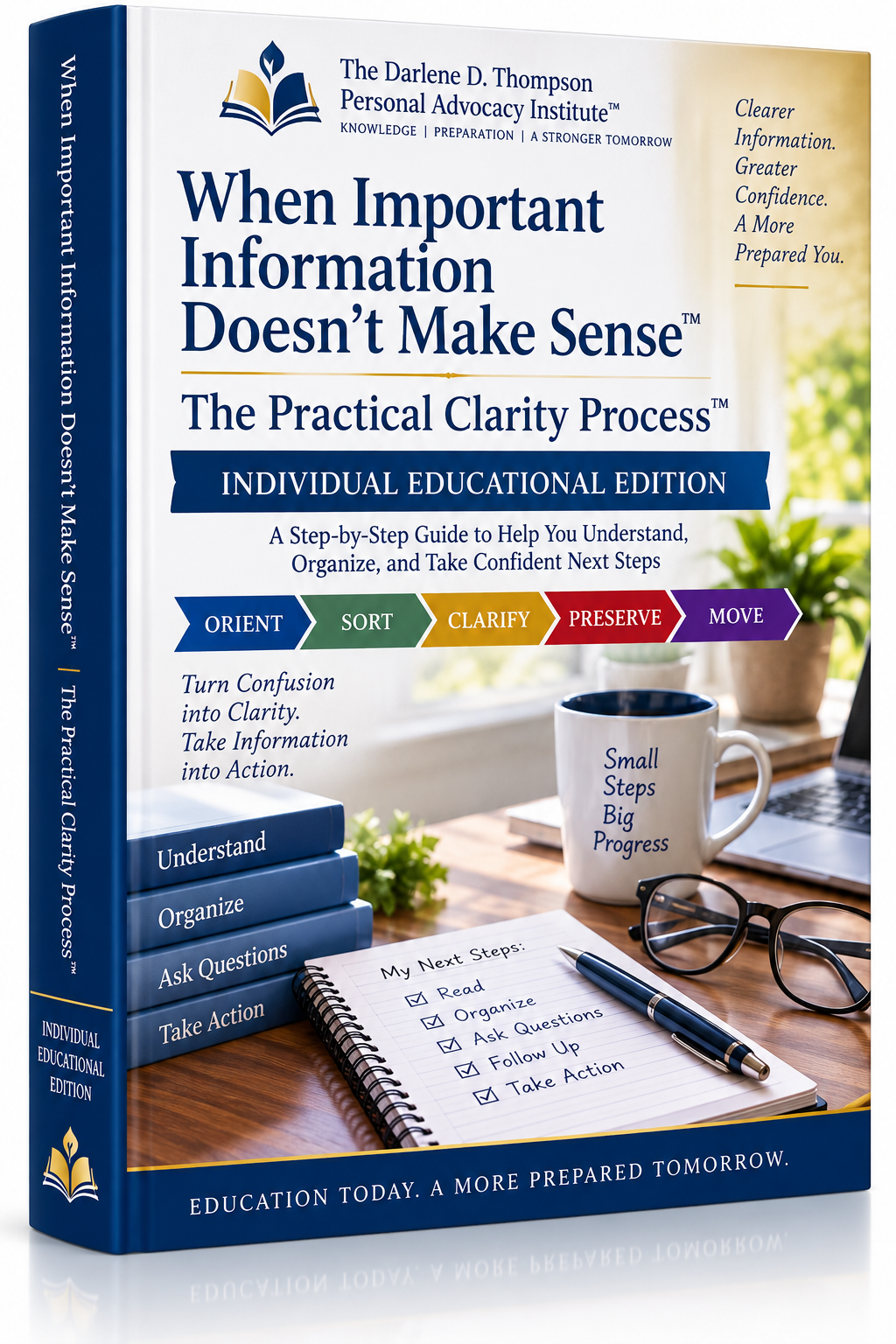
When Important Information Doesn’t Make Sense™
The Practical Clarity Process™
Individual Educational Edition
Use the completed 50-page educational resource to work through the Practical Clarity Process™ for your own learning.
USD 14.95
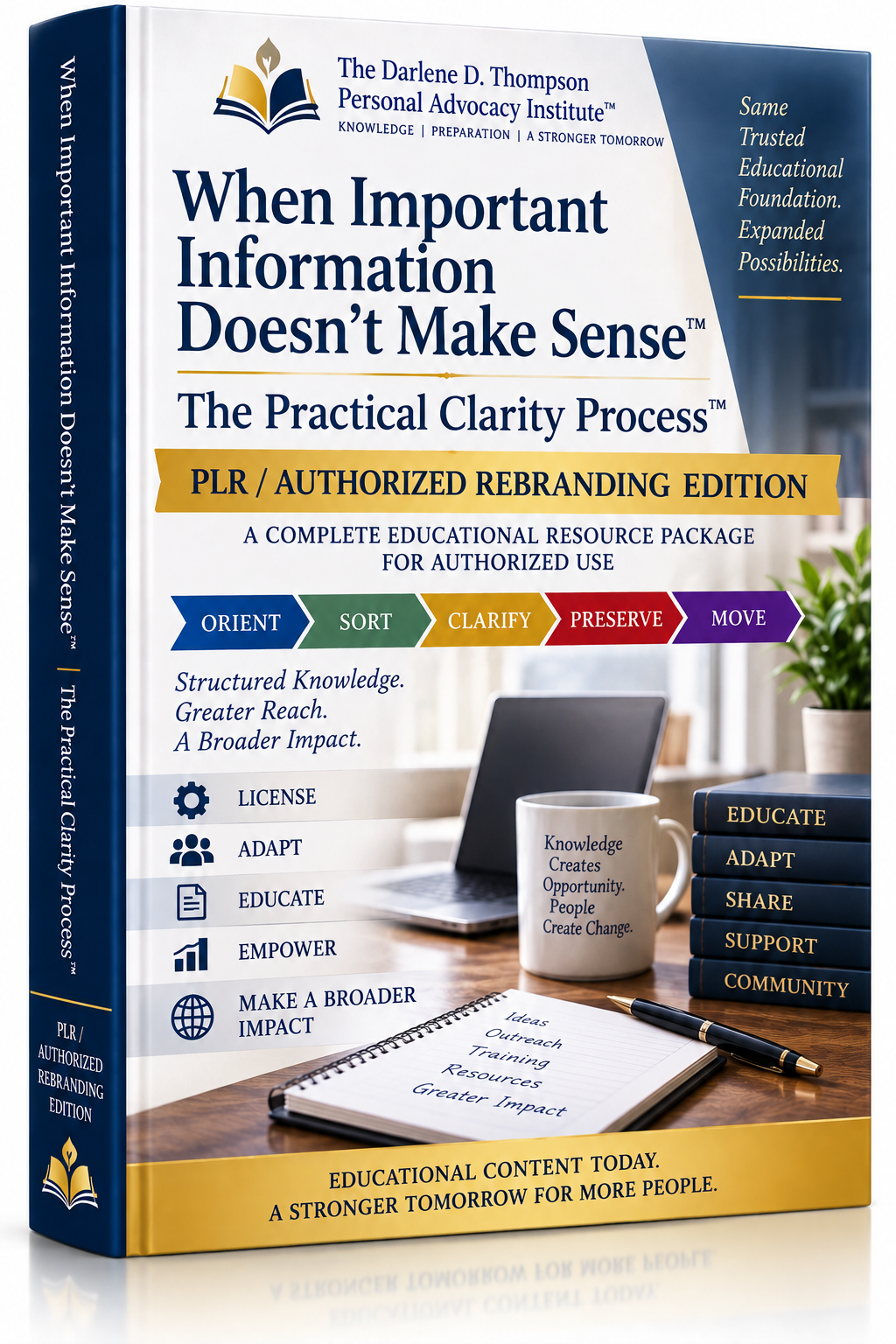
When Important Information Doesn’t Make Sense™
The Practical Clarity Process™
PLR / Authorized Rebranding Edition
Explore the separate licensed edition designed for eligible purchasers seeking controlled rights to adapt and rebrand the resource for another audience.
Commercial release remains subject to qualified legal review.
When Understanding Leads to Preparation
Once the situation becomes clearer, you may realize that you need to get ready for an appointment, meeting, conversation, application, review, or decision.
That is where the Get Prepared pathway may help.